Rotary's Leaders
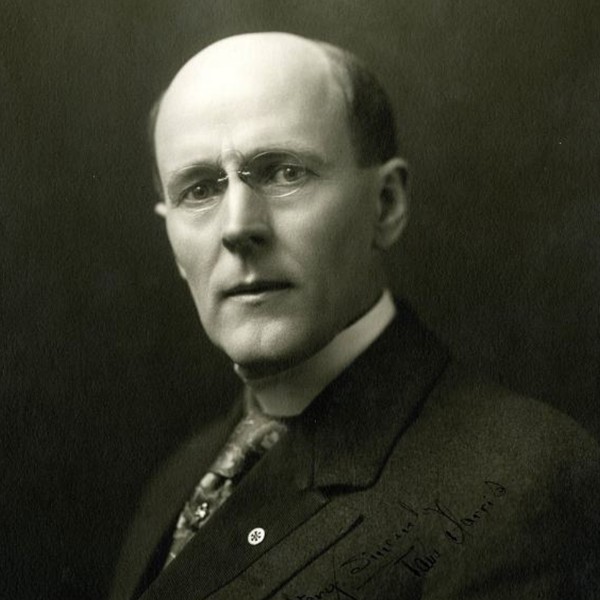
Paul Harris
Founder of Rotary
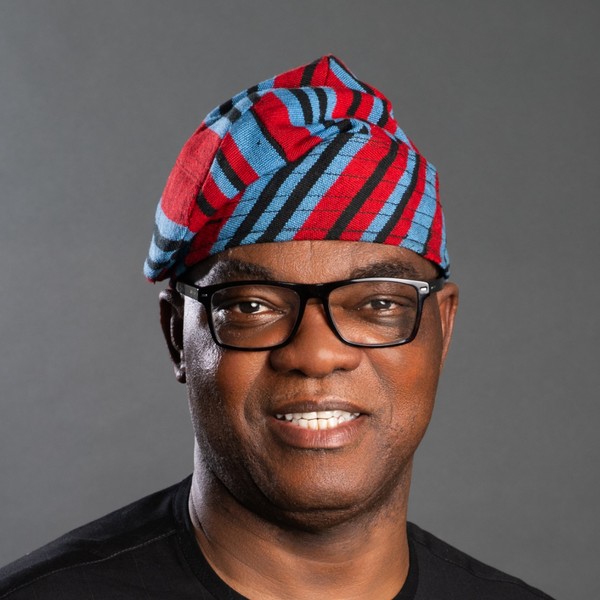
Olayinka Hakeem Babalola
President of Rotary International
Founding
Rotary began in 1905 with the ideas developed at evening gatherings by attorney Paul Harris and three friends — coal merchant Silvester Schile, mining engineer Gustavus Loehr and merchant tailor Hiram Shorye. The aim of these first meetings was to overcome feelings of loneliness, to get to know one another and, by building good relationships among themselves, to foster each person's individual growth.
In fact, these first four members of Rotary differed greatly in nationality and religious belief. They were of English, German, Swedish and Irish descent and had emigrated to America. In terms of faith, they were Protestant, Catholic and Jewish. In this way, the principle that Rotary would later embrace — making no distinction of race, religion, language or gender — arose naturally.
With the printer Harry Ruggles and the real estate agent Will Jenson also joining this group, the Rotary Club of Chicago was founded on 23 February 1905.
Schile was elected the club's first president. Paul Harris, who had first proposed the idea of the club, became president only two years later.
The first Rotary Club, formed by these six people, was established for the purpose of friendship, fellowship and mutual assistance. Because the meetings were held in rotation at each member's office, the word 'Rotary' — proposed by the members and meaning rotation around a central axis — was adopted as the club's name.
History
The foundation of Rotary rests on encouraging and developing the ideal of service as the basis of all worthy enterprise; cultivating and using acquaintance as an opportunity for service; promoting high ethical standards in business and the professions; recognising and appreciating the worth of all useful occupations; and each Rotarian's dignifying of their own occupation and profession as an opportunity to serve the community.
It is defined as each Rotarian applying the 'ideal of service' in their personal, professional and community life, and as advancing international understanding, goodwill and peace by fostering worldwide bonds of friendship among business and professional people united in the ideal of service.
Rotarians embrace the mottoes 'Fellowship Through Service' and 'They Profit Most Who Serve Best'. These ideals are what Rotarians worldwide have in common and form the basis of their friendships.
Today there are more than 1,200,000 Rotarians in over 35,000 Rotary Clubs. This figure becomes all the more significant when Rotary's impact is considered. Rotarians strive to create order where there is confusion, beauty where there is ugliness, and happiness and well-being where there is loneliness and misunderstanding.
Rotary's purpose, which had been set out in six principles up to the 1935 Mexico City Convention, was reduced to a single article of four parts at the 1951 Atlantic City Convention. Every Rotarian is asked to develop and promote the following four points:
- Regarding the development of acquaintance as an opportunity for service, and establishing high ethical standards in one's profession,
- Recognising that all useful work is honourable, and each Rotarian dignifying their own occupation and profession as an opportunity to serve the community,
- Each Rotarian applying the ideal of service in their personal, business and community life,
- Advancing mutual understanding, goodwill and peace by fostering worldwide bonds of friendship among business and professional people united in the ideal of service.